
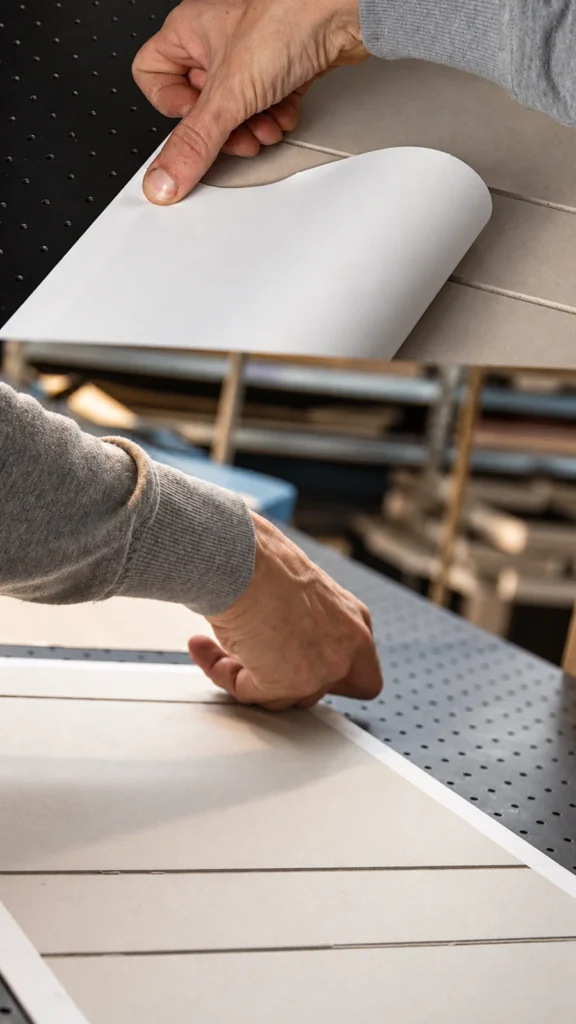
Before it becomes a box, packaging begins with materials and people. A hand guides the paper, the board finds its position, a flat structure takes shape. In our workshop, a project moves beyond the drawing: it acquires weight, texture and a particular way of opening.
Behind the door, a connected process
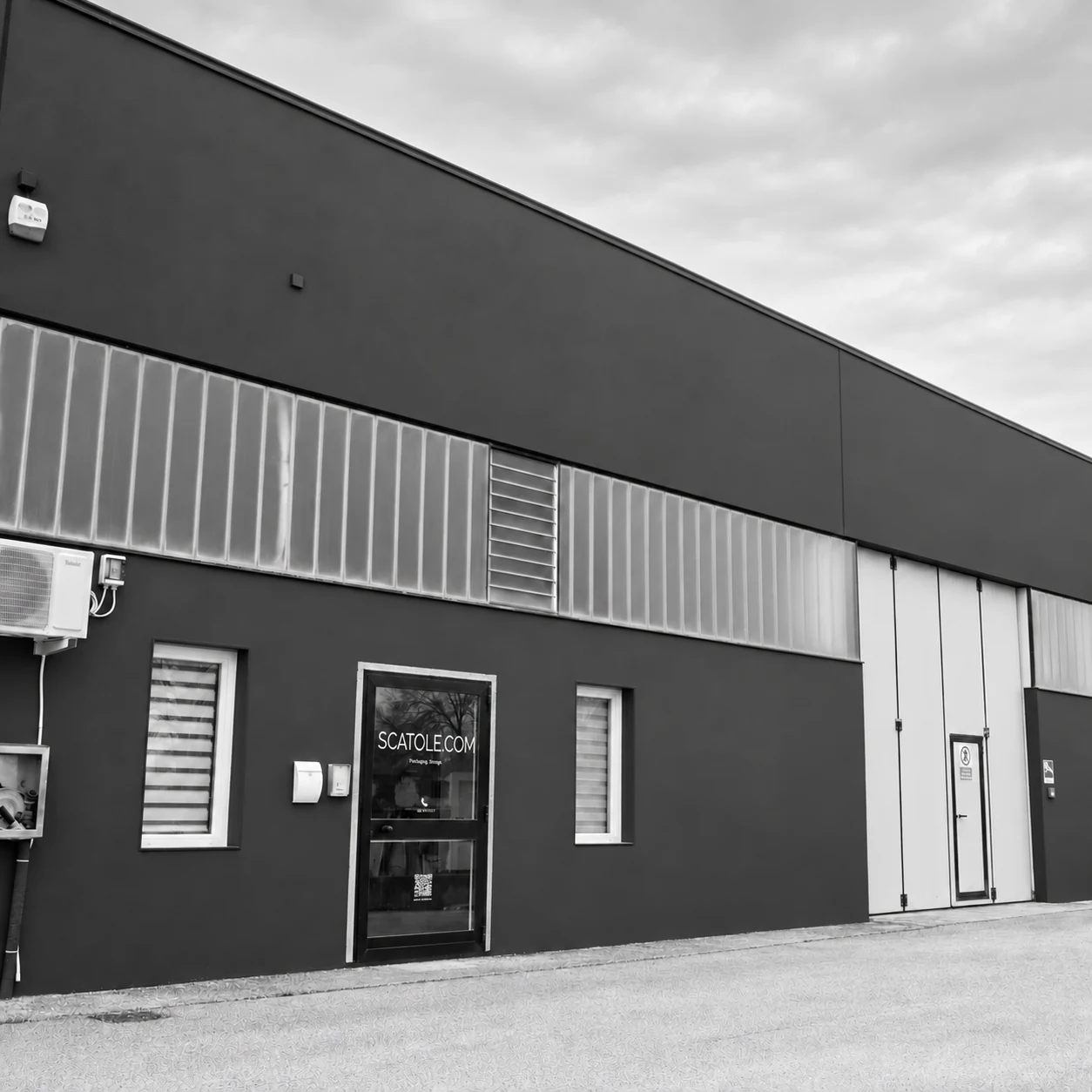
These photographs show a real workplace: our premises, equipment and materials on the workbench. At Scatole.com, manufacturing in-house means following a project through its stages and keeping the people who prepare it close to those who make it. A question about the covering, the space needed for a product or a change to a sample can be discussed directly with the production team.
The gesture the finished box does not reveal
In the photograph of the hands, paper is being guided onto board. The task looks straightforward, yet the starting reference, the way the sheet settles and the attention paid to its edges all matter. Manual work calls for an understanding of the material and control of each movement. Its value remains in the box long after the work itself is hidden from view.
Precision needs equipment and judgement
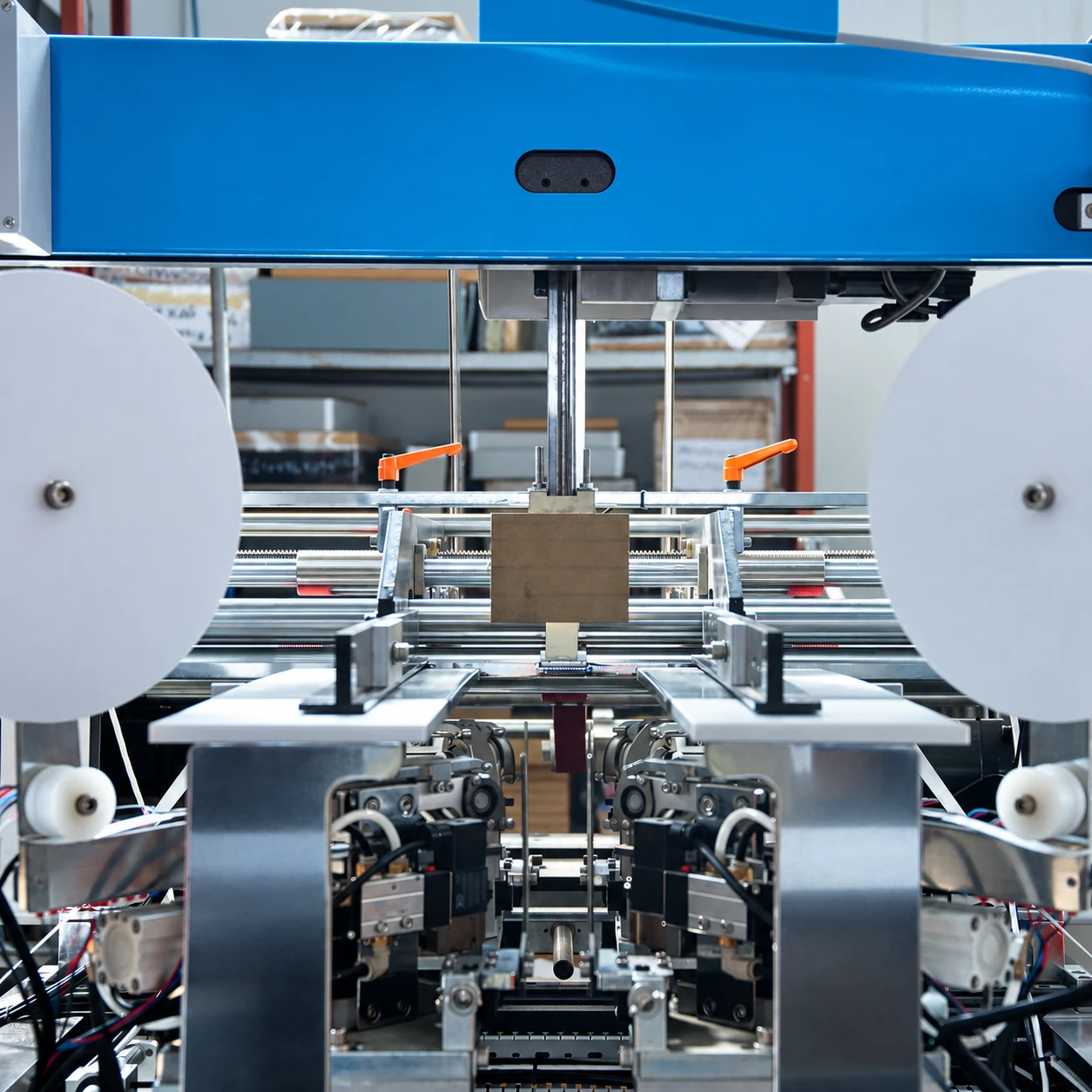
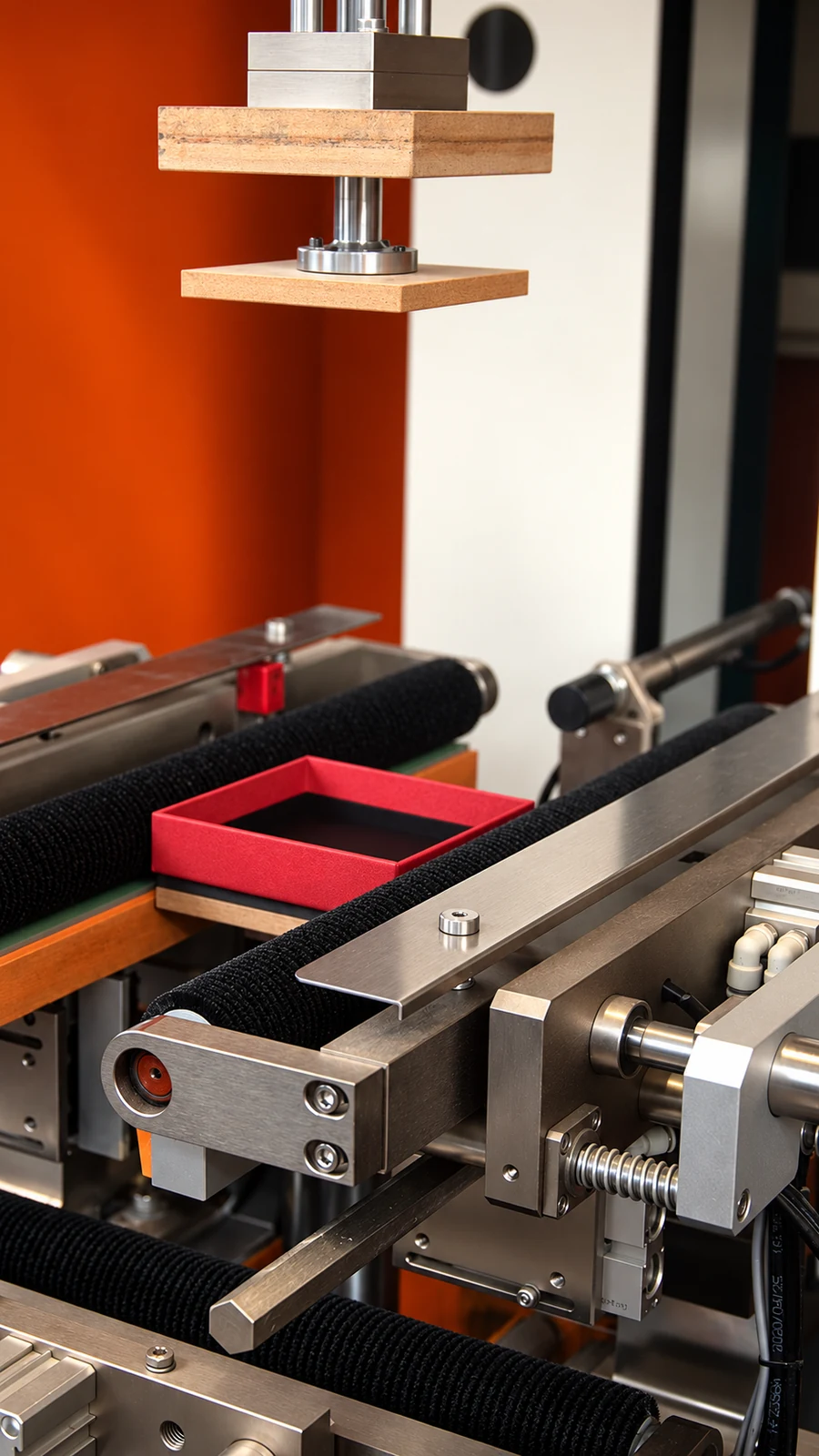
Machines are part of our craft. They provide reference points, support and consistency; people bring the experience needed to prepare the work, adjust the equipment and assess the result. The metal surfaces, guides and red box in these photographs tell that shared story. A coherent finished object depends on more than well-made individual parts: each part must meet the next one correctly.
Paper is chosen by touch as well as sight
A screen helps you imagine a colour. A physical sample reveals how a paper responds to light, how it feels and how it works with printing or an insert. Structure, covering and finish therefore belong in the same conversation. A quiet surface can draw attention to the contents; a pronounced texture can become a recognisable part of a brand. The design emerges from the relationship between these choices.
Working closely helps us respond quickly
Keeping the process in-house reduces handovers between separate suppliers and helps us coordinate the stages of production. We can address a technical question where it arises, compare the sample and plan the work with the whole project in view. This continuity supports prompt delivery. The schedule remains specific to each job: quantities, materials, customisation and approvals all affect the time required.
Quality is how everything comes together
When a box is ready, we return to the intention behind it. Proportions, covering, opening and product presentation should feel consistent. An edge, a fold or a colour combination is part of what someone experiences when they first hold the box. Our aim is for the care behind the work to be apparent in that moment, through an object that gives its contents the attention they deserve.
Bring your project into our workshop
Tell us about the product, how the packaging will be used and the impression you want to create. We can start with dimensions and references, select a structure and assess materials and custom details through a physical sample.
Meet the company · Explore papers with the Sample Pack · Discuss your project