
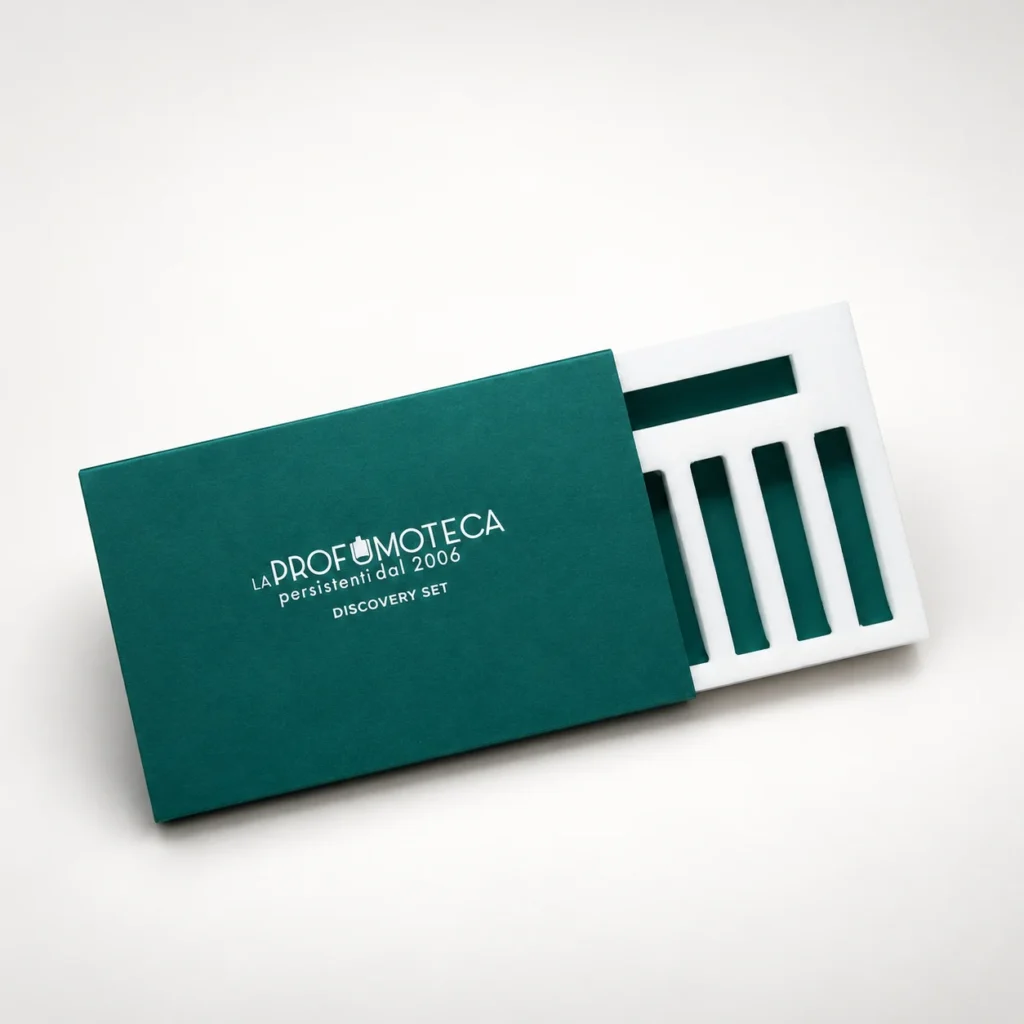
Before the first spray, there is a colour, a texture and the movement of opening a box. For a distinctive perfume, that moment introduces a world. It hints at the collection’s character and invites closer attention. A well-designed discovery set gives even the smallest vial a considered presence.
A small collection with an identity of its own
A sample kit lets people explore several fragrances and return to them over time. Its packaging supports that experience: keeping the samples together, making their names easy to read and giving each vial a place to return to. Its usefulness continues long after the first opening.
We approach the box as part of the brand’s identity. Proportions, layout and materials should express the same character as the collection. A carefully chosen paper, a well-placed logo and space around each element can give a simple presentation remarkable clarity.
The paper sets the tone
In the green discovery set pictured here, the covering and pale print create a restrained contrast. Opening it reveals a white insert that catches the light and defines the compartments. A few coordinated elements give the design its distinct character.
Smooth, textured and deeply coloured papers each feel different. They should be assessed in person alongside the intended print: foil or screen printing needs to remain legible at a small scale. A physical sample reveals qualities that photography can only suggest.
An insert designed around the vial
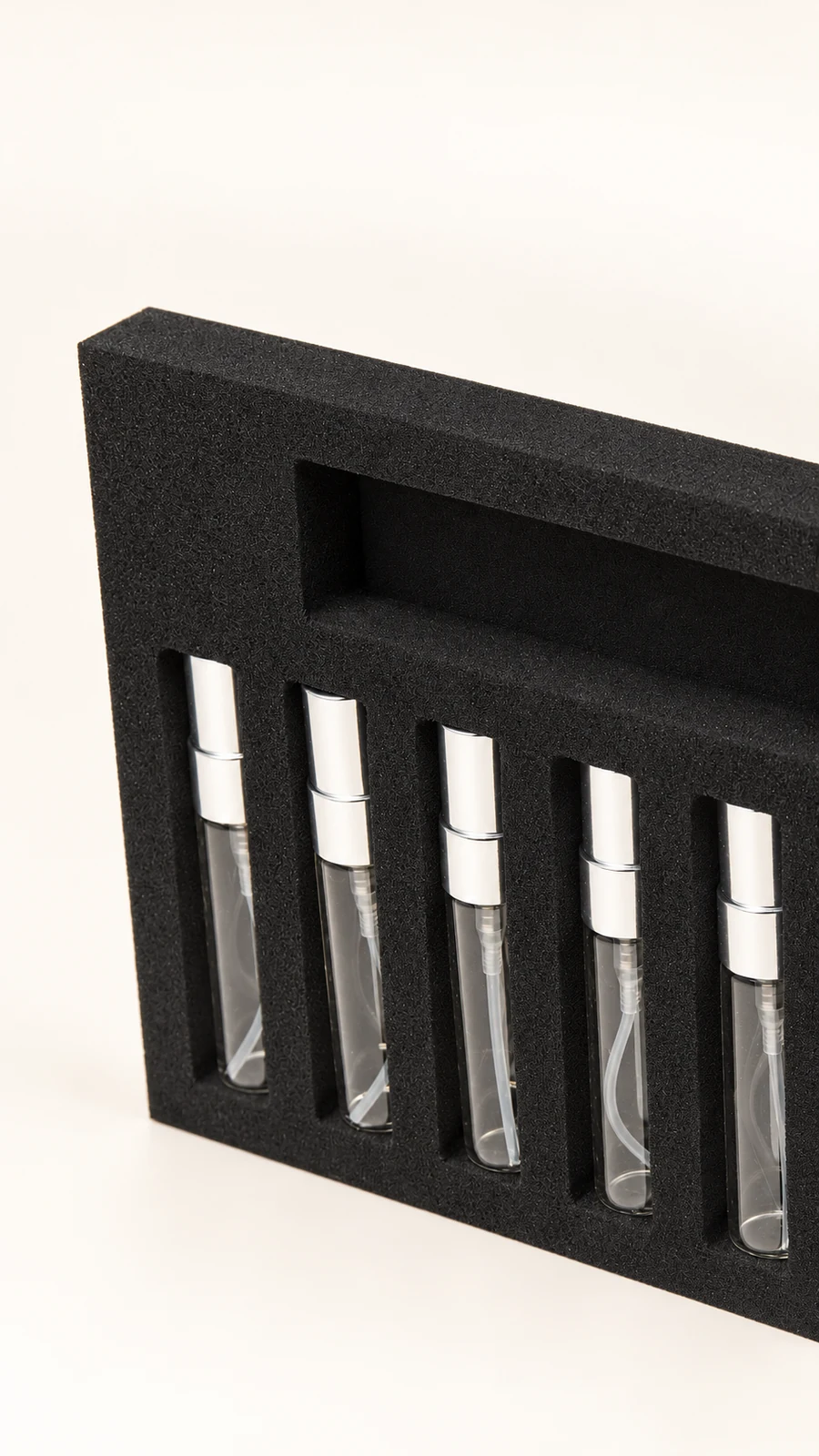
The diameter, overall height and cap shape determine the compartment design. How much of the vial remains visible also matters. Set too deeply, it becomes difficult to lift out; leave too much exposed and it may move. Retention, presentation and ease of removal need to work together.
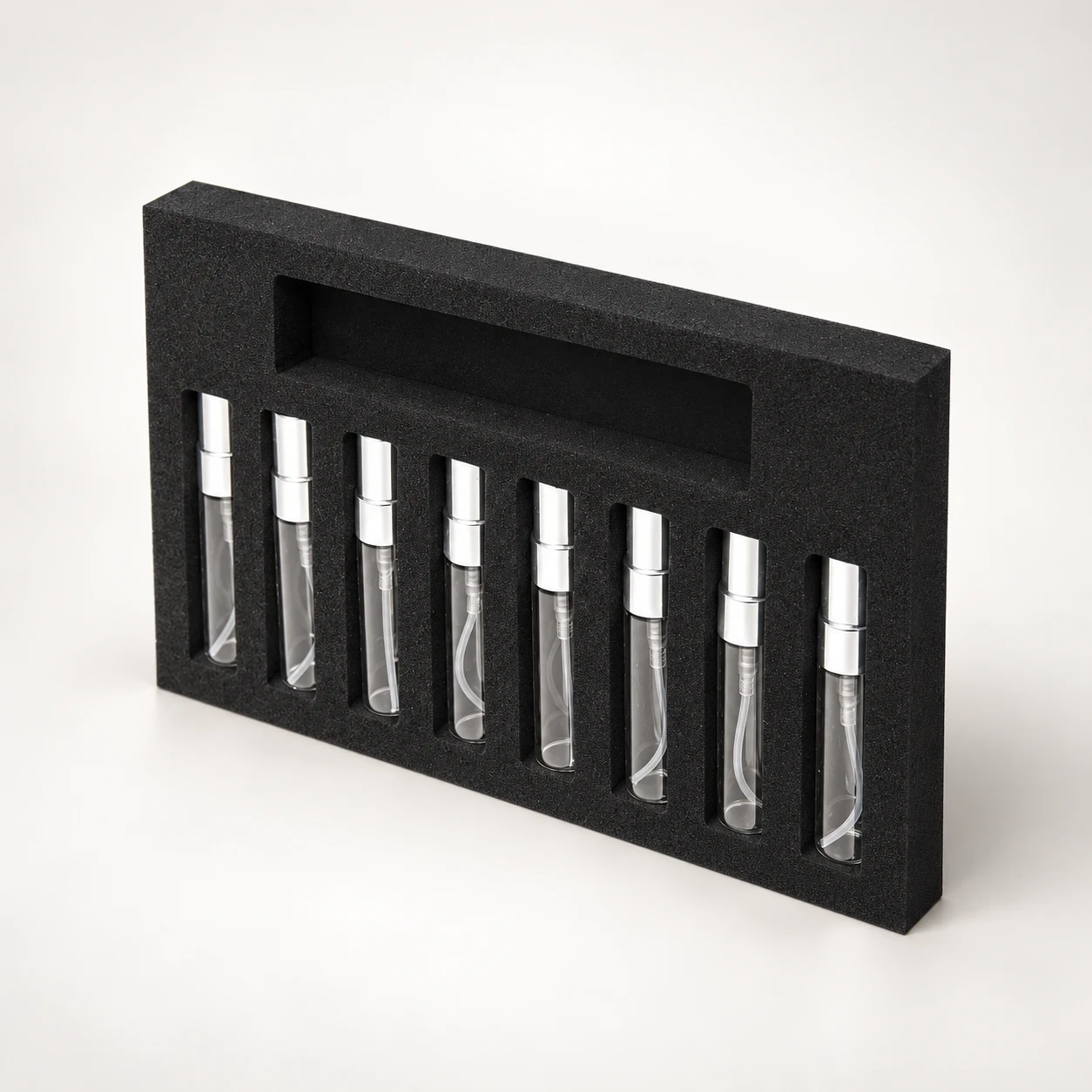
Shaped foam can follow the bottle’s profile, while a board insert creates its layout through cuts and folds. Material, thickness and clearances are assessed against the real product. The photographs show different solutions, each suited to a particular brief rather than every collection.
Opening and closing are part of the experience
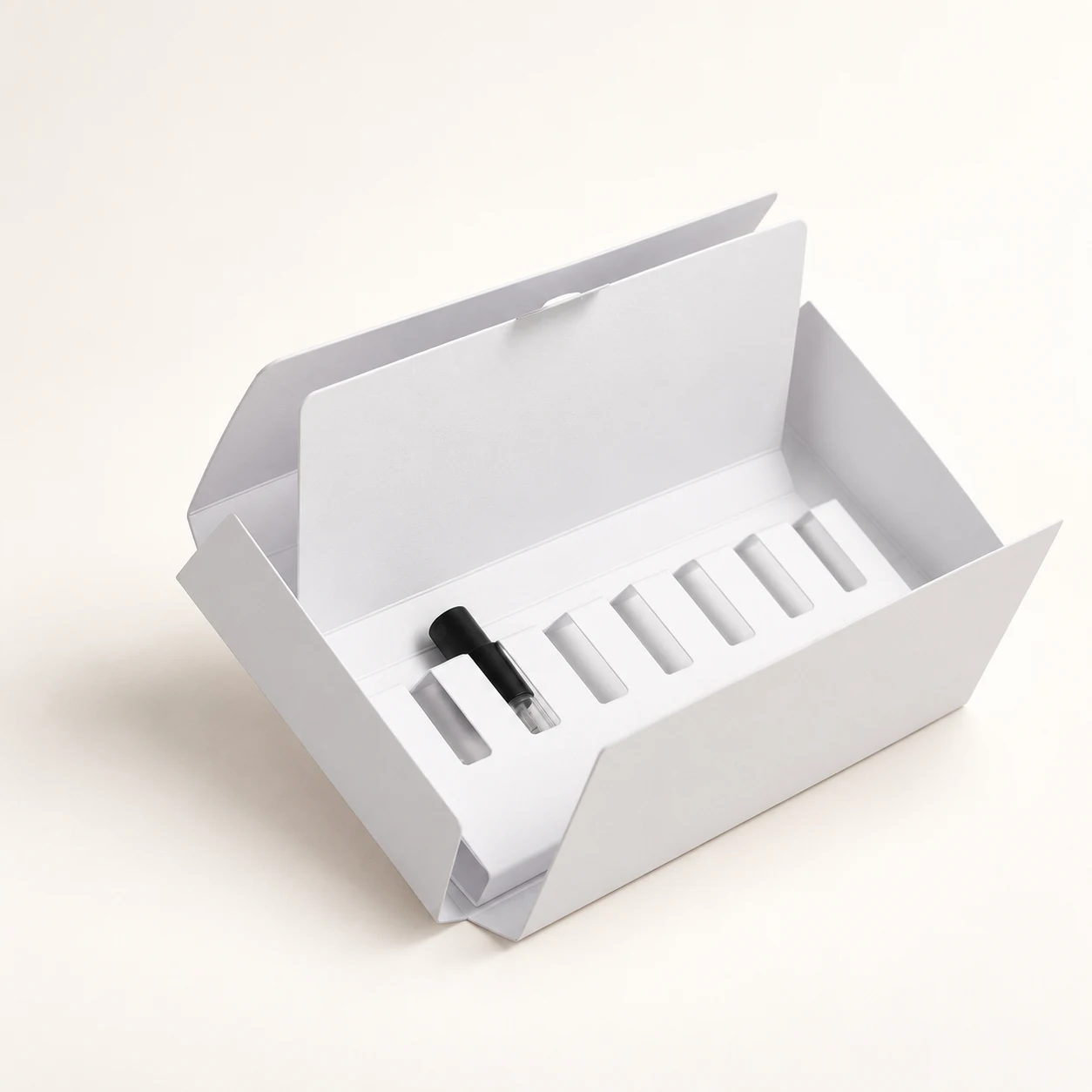
A drawer box reveals the samples gradually. A book-style presentation shows them together. A compact folding carton can suit a selection intended to travel. The right structure depends on the experience you want to create and the space the products need.
A fragrance guide, a card or scent blotters can have their own space when required. Plan these additions from the outset: introducing them later can affect the overall size, closure and ease of use.
Luxury through consistency
In thoughtful packaging, each detail has a purpose. Aligned vials bring order; spacing makes the selection easy to read; the insert’s colour frames the glass and caps. The result can be expressive or understated, provided the choices support the brand.
For shipping, the presentation box also needs to be assessed with its outer packaging. Protection depends on the complete system and the actual contents. An elegant appearance alone cannot establish how it will perform in transit.
From a fragrance sample to a packaging sample
Start with a real vial, the number of fragrances, the required quantities and an artwork direction. In our workshop, we develop the structure and insert together, checking how the samples fit and how the box opens and closes.
Before production, a prototype lets you judge the weight, paper, proportions and access to the vials in your hands. This is where a visual idea becomes a physical object ready to represent the collection.
Shape the first encounter with your perfume
Tell us about your collection and share your vial dimensions and details. Begin with the Discovery Set configurator or discuss a bespoke presentation box with fitted compartments and selected materials.