
The edge of a box tells you a great deal. It shows how carefully the covering has been worked around the structure, how neatly the corner is formed and how well the paper suits the design. They are small details, visible and tangible when you pick up a presentation box. In our workshop, they are part of the work every day.
Before the box, the sheet
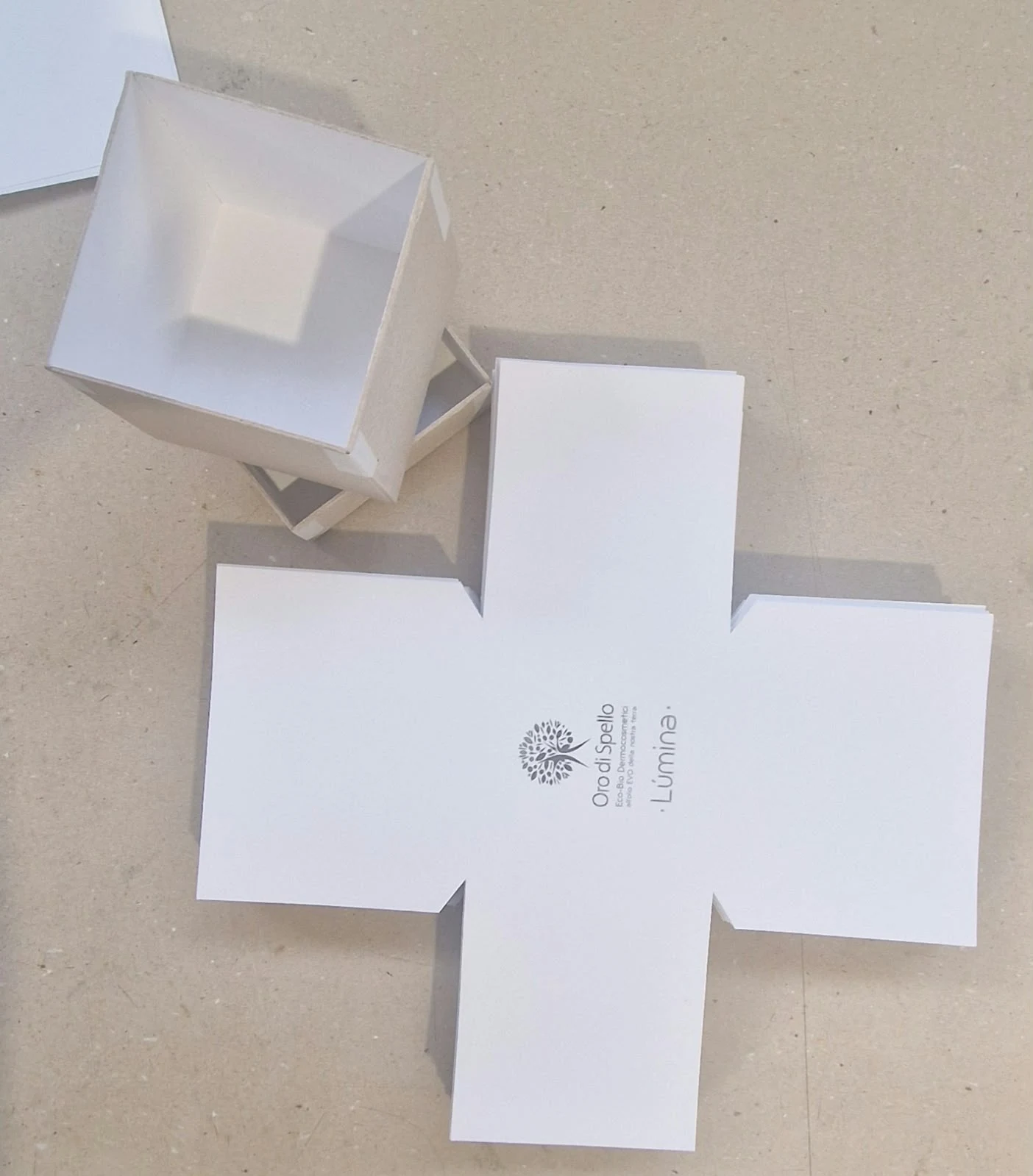
On the workbench, a shaped sheet and an open box show two stages of the same job. Laid flat, the paper still has its flaps, cut-outs and folds to come. In the assembled piece, those parts become surfaces, turned edges and corners.
Precision begins with the layout. Dimensions, board thickness and allowances for the covering need to work together. Different papers behave differently, and the size of a box changes how it is made. We consider the structure alongside the materials and the purpose of the packaging.
The hand that prepares the machine cycle
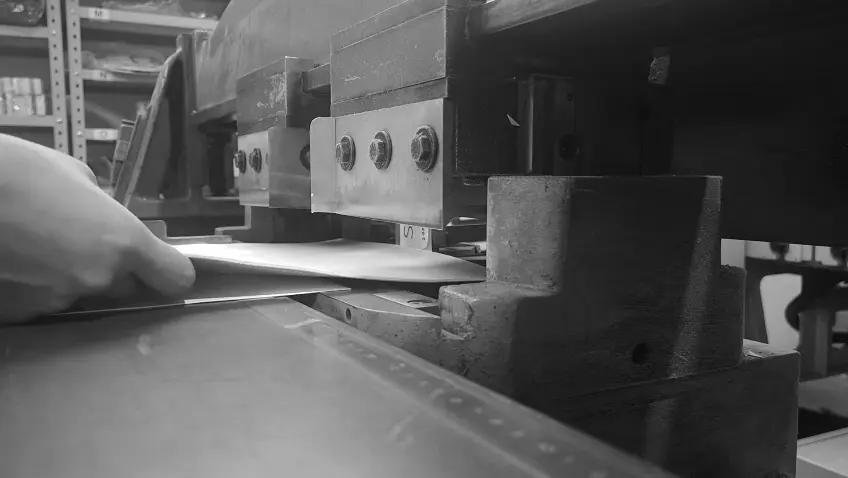
The video shows one stage in our workshop: material is positioned by hand and guided into the machine. A deliberate movement comes before the cycle. Afterwards, there is a piece to inspect.
The machine makes the operation repeatable. The operator prepares the material, checks its position and examines the result. Craftsmanship also means maintaining that attention throughout a run: noticing a difference, adjusting a setting and keeping each successive piece under control.
Edges, turn-ins and the fit of a lid
The covering needs to follow the structure while retaining the character of the paper. We look at how it wraps around an edge, how the parts meet and how the inside is finished. Then we try the closure: the lid should feel right as the box is opened and closed.
A good finish comes from these checks working together. A neatly formed corner and a carefully finished surface bring clarity to a design, whether it is a simple box or a presentation set with printing and fitted inserts.
The whole process, in one workshop
At Scatole.com, we handle the production process in-house, from design and material preparation through manufacturing, assembly and final checks. The people developing a box can speak directly to the people making it.
When a sample needs a change, the route is short: return to the drawing, check the solution on the bench and continue the work. Keeping the stages close together helps us connect technical decisions with the result the customer expects.
Quicker delivery starts with good organisation
Managing production ourselves reduces waiting between stages. We can coordinate materials and make adjustments without moving the project between several suppliers. That continuity helps us keep jobs moving and deliver them promptly.
The delivery date is agreed around the actual project: quantity, dimensions, papers and finishes. An approved sample and production-ready artwork help the work begin with clear decisions already in place. Time saved through organisation leaves room for the details that need care.
You recognise the work when you open the box
The process ends with something straightforward to use. The box opens, the product sits where it belongs and the parts work together. Behind that ease are considered design, experienced hands and repeated checks.
That is the care we aim to bring to every job: packaging built around the product and followed through our workshop until it is ready for delivery.
Where does your project begin?
Start with the size and the product the box will hold. Explore the models in the configurator, or tell us about the papers, finishes and timing you have in mind.